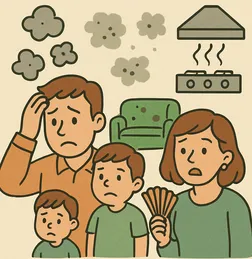
How to Improve Indoor Air Quality in Your Home
When it comes to home safety and comfort, indoor air quality (IAQ) often gets overlooked. But studies show that the air inside your home can be significantly more polluted than the air outside, even in large cities. Poor IAQ isn’t just a nuisance; it can lead to chronic health issues, especially for children, the elderly, and those with respiratory conditions.
At Vivid Home Inspections, we help homeowners recognize hidden hazards and create healthier living spaces. Here’s what you need to know about indoor air pollution and how to improve the air you breathe.
Why Indoor Air Quality Matters
If you’re like most people, you spend about 90% of your time indoors. Indoor air pollutants can be 2–5 times higher, and in some cases up to 100 times higher, than outdoor levels. Effects can range from mild irritation to serious health problems, including respiratory diseases, allergies, and even cancer.
Signs of Indoor Air Quality Problems
You may have an IAQ issue if you notice:
These symptoms align with Sick Building Syndrome (SBS), where health issues worsen indoors but improve when leaving the building.
Common Sources of Indoor Air Pollutants
Indoor air contaminants can come from nearly every room in the house:
Living Spaces
Kitchen
Bathroom
Bedroom
Utility Room
Basement
Garage
How to Improve Indoor Air Quality
Increase Ventilation
Consider a mechanical ventilation system to bring in fresh air and filter indoor air.
The EPArecommends ventilation, source control, and filtrationas the three main strategies for improving IAQ.
Clean Regularly
Control Moisture
Inspect and Maintain Systems
Reduce Pollutant Sources
Usen on-toxic, low-VOC products for cleaning and home projects.
Choose solid wood or metal furniture instead of particleboard.
Test for Hidden Hazards
Radon testing is essential in many homes, especially in basements (EPA)
Hire a professional to test for mold or abestos, especially before renovations.or
Long-Term vs. Immediate Health Effects
Short-Term Effects:
Long-Term Risks:
The EPAa nd WHO both warn that even if symptoms aren’t felt immediately, prolonged exposure to indoor air pollutants can contribute tos erious long-term health effects.
Don't Forget the Detectors
Smoke detectors should be installed in each bedroom or hallway.
Carbon monoxide detectorsare a must in any home with gas appliances.
Test detectors monthly and replace batteries at least once a year
Final Thoughts
Indoor air pollution is often invisible, but its effects are very real. The good news is that improving your home’s air quality is possible with the right awareness, habits, and inspections.
At Vivid Home Inspections, we can help identify the sources of poor air quality and recommend practical, effective solutions to keep your family safe and healthy. Call (609) 922-7456 or visit our online scheduling to set up a home or air quality inspection.
